
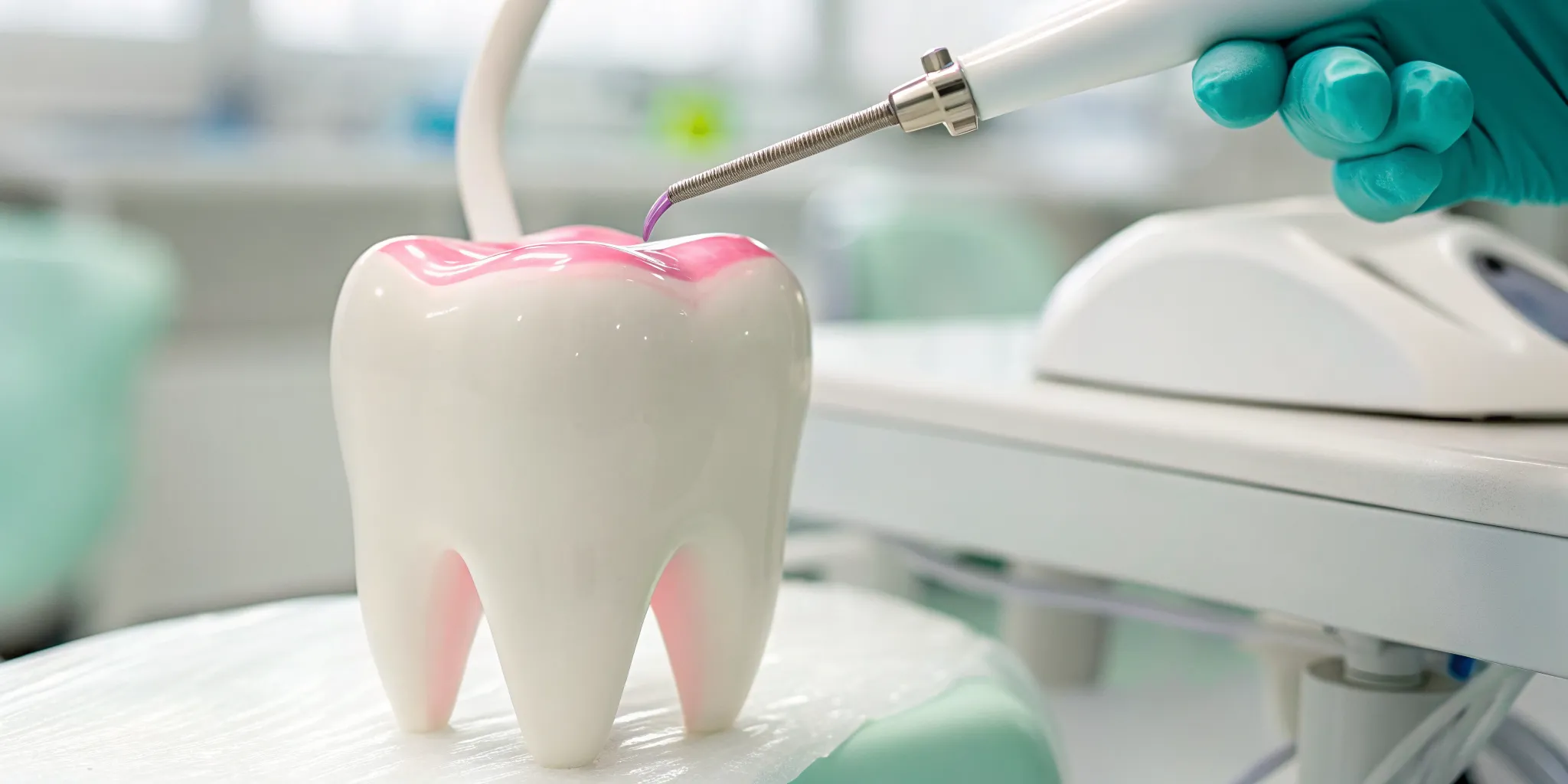
When you hear the word “ozone,” you probably think of the atmosphere, not your dental appointment. But at Primary Integrative Dentistry, ozone is one of the most versatile tools in our biological dentistry toolkit. Ozone therapy for teeth uses a supercharged form of oxygen (O3) to eliminate harmful bacteria, reduce inflammation, and stimulate your body’s natural healing response. It is a minimally invasive technique that works without harsh chemicals or invasive procedures, and it is changing the way we approach dental care.
Key Takeaways
- Targeted natural disinfectant: Ozone therapy uses a supercharged form of oxygen to neutralize the specific bacteria that cause cavities and gum disease, targeting harmful pathogens without affecting your healthy cells.
- Gentler treatment and faster healing: This therapy allows for less invasive treatments (like addressing early cavities without a drill) and helps reduce inflammation to speed up recovery after procedures.
- Proactive long-term wellness: By creating a healthier, more balanced oral environment, ozone therapy supports your body’s natural ability to remineralize teeth and resist future decay.
What Is Ozone Therapy for Teeth?
Ozone therapy for teeth uses ozone (O3), a molecule made of three oxygen atoms, as a powerful antimicrobial agent in dental care. At Primary Integrative Dentistry, we see the mouth as the gateway to the rest of the body, and ozone helps us treat that gateway with precision. When applied in the mouth, ozone selectively neutralizes bacteria, viruses, and fungi that contribute to tooth decay and gum disease without harming your healthy cells. A 2025 systematic review in BMC Oral Health confirmed that ozone therapy demonstrates significant efficacy in healing, pain management, and therapeutic outcomes across multiple dental applications.
How Ozone Works in Your Mouth
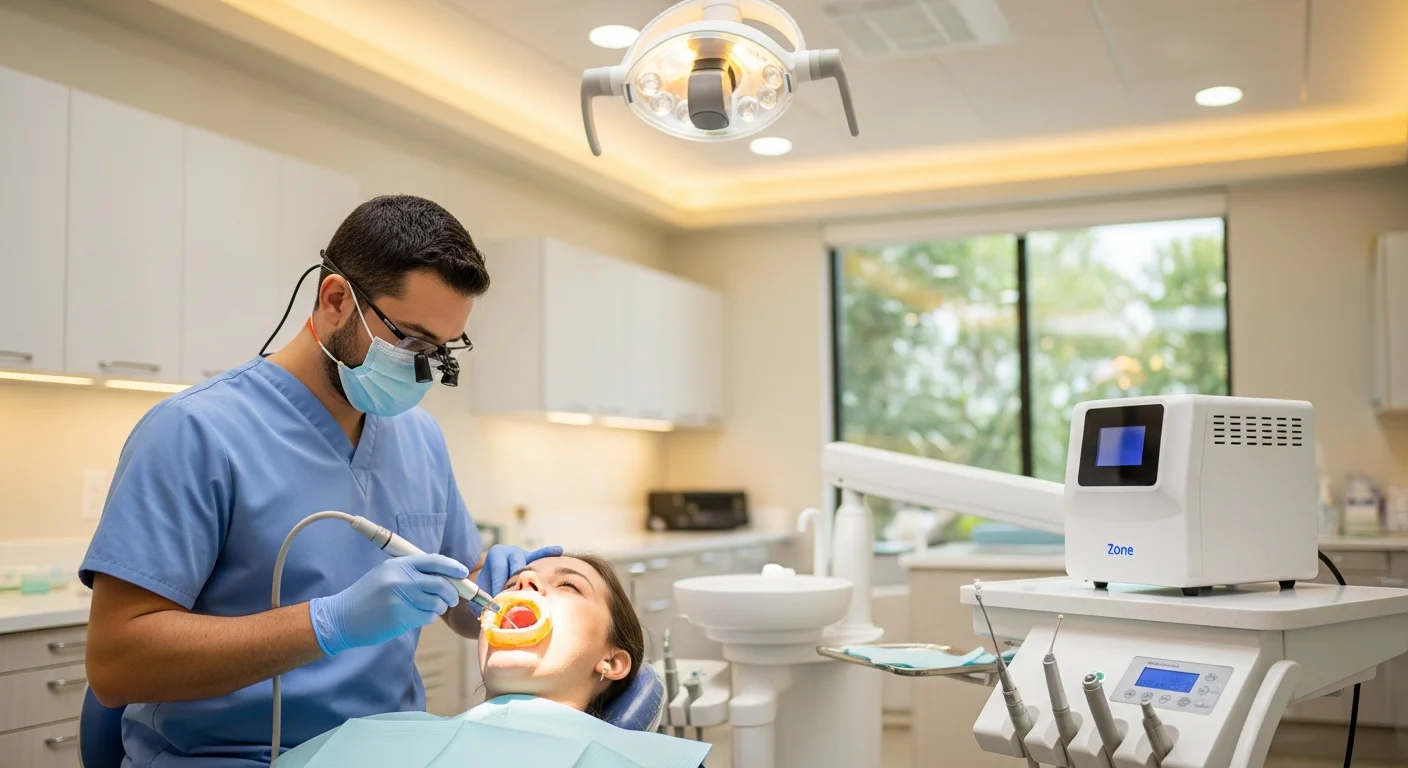
Harmful pathogens like bacteria and fungi have negatively charged cell walls. Ozone is naturally drawn to these pathogens, and when it makes contact, it disrupts the cell wall and neutralizes the threat instantly. Your healthy cells have stronger antioxidant defenses, so they remain completely unharmed.
Beyond disinfecting, ozone breaks down the acidic waste products left behind by bacteria, creating a more alkaline environment that discourages further decay. This pH shift also encourages enamel remineralization, the natural process where minerals are redeposited into weakened tooth structure.
The Three Forms of Dental Ozone Treatment
Depending on the dental issue, we use three forms of ozone:
- Ozone gas: Applied directly to a specific area, such as an early cavity or a tooth after a filling, to completely sterilize the site.
- Ozonated water: A powerful antimicrobial rinse used to irrigate areas during procedures like root canals or deep cleanings, reaching bacteria in hard-to-access places.
- Ozonated oils: Applied topically to treat soft tissue issues like canker sores, cold sores, or irritated gums, speeding up healing and reducing discomfort.
Key Benefits of Ozone Therapy for Teeth
Ozone therapy for teeth offers benefits that make dental care gentler, more effective, and more aligned with your body’s natural healing processes:
- Non-toxic and chemical-free: No harsh disinfectants. No unnecessary antibiotics. Ozone is a natural molecule that breaks down into regular oxygen after treatment.
- Conservative treatment: Early cavities can often be treated without drilling, preserving your natural tooth structure.
- Faster healing: By increasing local oxygenation, ozone stimulates your body’s immune response and accelerates tissue repair after procedures.
- Broad-spectrum antimicrobial: Effective against bacteria, viruses, fungi, and parasites on contact.
- Safe for all ages: Gentle, painless, and well-tolerated by children and adults alike.
- No side effects: When administered by trained professionals, ozone therapy has an excellent safety profile with no reported adverse effects.
- Supports remineralization: Ozone neutralizes acids on the tooth surface, shifting the pH to create ideal conditions for enamel to rebuild its mineral structure naturally.
Dental Conditions Treated with Ozone Therapy
Ozone therapy for teeth is effective across a wide range of conditions because it addresses the root cause of most oral health problems: harmful microbes. At Primary Integrative Dentistry, we integrate ozone into treatment plans for these common conditions.
Early Cavities and Tooth Decay
For small, early-stage cavities, ozone gas can penetrate the tiny tubules of your tooth and neutralize acid-producing bacteria. This stops the cavity in its tracks and creates conditions where your tooth can remineralize and repair itself, all without drilling away healthy tooth structure. It is an ideal approach for patients with dental anxiety and for children who find traditional drilling frightening. Even when a filling is eventually needed, applying ozone first ensures thorough disinfection before restoration. This preserves your natural tooth structure and aligns with our philosophy of conservative, wholistic dentistry.
Gum Disease and Periodontal Infections
Ozone gas and ozonated water effectively reduce harmful bacteria hiding in deep gum pockets. When used alongside traditional deep cleaning (scaling and root planing), ozone helps reduce inflammation, minimize bleeding, and allows gum tissues to heal and reattach more effectively. A 2025 meta-analysis found that ozone therapy used alongside scaling and root planing significantly improves periodontal outcomes compared to scaling alone. For patients with chronic or recurring gum disease, ozone provides an additional tool to manage the condition without the side effects of prolonged antibiotic use.
Root Canal Disinfection
Root canal treatment requires thorough disinfection of microscopic tubules inside the tooth. Traditional irrigants cannot always penetrate the full depth of these tiny channels, leaving residual bacteria that may cause reinfection. Ozone gas reaches into these microscopic spaces where liquid solutions cannot travel, providing a deeper level of disinfection that improves long-term success rates. This supports our approach to regenerative endodontics, where the goal is not just to save the tooth but to support its biological healing. Learn more about what science says about root canal alternatives and when vital pulp therapy may be the better option.
Tooth Sensitivity and Oral Sores
Ozone helps seal the tubules that transmit painful sensations in sensitive teeth. For canker sores, cold sores, and other oral lesions, ozonated water or oil speeds healing and reduces pain by neutralizing pathogens and calming inflammation. Many patients experience relief within minutes.
Extractions, Bone Grafts, and Implant Sites
After procedures like tooth extractions or dental implant placement, ozone sterilizes the surgical site, reduces inflammation, and speeds up tissue regeneration. By increasing local oxygenation, ozone helps minimize post-surgical complications like dry socket and infection. This is particularly important for patients receiving full arch implants or zirconia implants, where a clean, bacteria-free surgical environment supports proper bone integration and long-term implant stability.
Is Ozone Therapy Safe?
Ozone therapy for teeth is safe when performed by a trained biological dentist. The treatment has been used in dentistry since the 1930s, providing decades of clinical data on its safety and effectiveness. A 2025 review in Current Oral Health Reports confirms ozone’s strong safety profile across dental applications, noting that no significant adverse effects have been reported when administered according to established protocols.
Your healthy cells have sophisticated antioxidant systems that protect them from ozone’s oxidative effects. Pathogens lack these defenses, which means ozone selectively eliminates harmful microorganisms while leaving your healthy tissues unharmed. Most treatments take only a few minutes, are completely painless, require no anesthetic, and have no downtime.
How Does Ozone Therapy Compare to Traditional Dentistry?
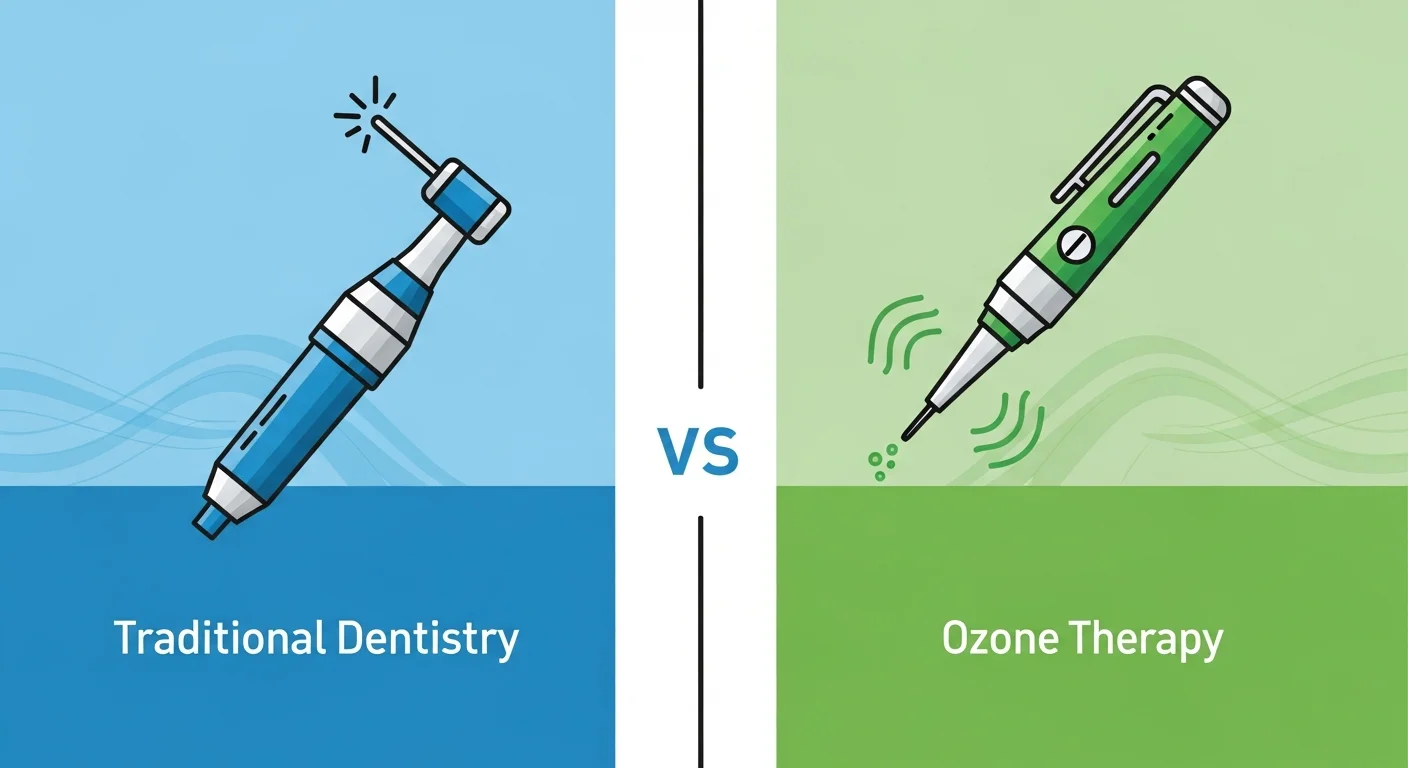
| Factor | Traditional Approach | Ozone Therapy |
|---|---|---|
| Early cavities | Drill and fill | Disinfect and remineralize (no drill) |
| Disinfection method | Chemical irrigants | Natural oxygen-based (O3) |
| Anesthetic needed | Often required | Rarely needed |
| Tooth structure preserved | Some removal required | Maximum preservation |
| Post-procedure healing | Standard recovery | Accelerated with reduced inflammation |
| Side effects | Numbness, sensitivity | None reported |
Ozone therapy represents a shift from reactive, mechanical dentistry to proactive, biological care. Instead of just drilling and filling, ozone addresses the root cause of dental disease: harmful bacteria. This aligns with the integrative dentistry approach at Primary Integrative Dentistry, where we focus on working with your body’s natural healing abilities.
How Often Do You Need Ozone Therapy?
The frequency of ozone therapy for teeth depends on your individual oral health picture:
- For prevention: Ozone can be incorporated into your regular dental cleanings every 6 months to reduce bacterial load and support long-term oral health.
- For active treatment: Conditions like gum disease, early cavities, or chronic infections may benefit from more frequent sessions until the issue is resolved.
- As part of procedures: Ozone is used during root canals, extractions, implant placements, and other procedures to enhance outcomes.
At Primary Integrative Dentistry, we create personalized care plans that incorporate ozone therapy based on your specific needs, using advanced diagnostics like 3D CBCT scanning, AI-powered diagnostic analysis, and oral microbiome testing to guide treatment frequency.
Who Is a Good Candidate for Ozone Therapy?
Ozone therapy for teeth is safe and effective for patients of all ages, including children. You may be an especially good candidate if you:
- Have early-stage cavities you want to treat without drilling
- Experience chronic gum disease or recurring infections
- Want to reduce your reliance on antibiotics for dental issues
- Have dental anxiety and prefer a gentler, quieter treatment
- Are preparing for or recovering from dental surgery
- Want a more natural, biological approach to dental care
- Are looking for a dentist who sees the connection between oral health and whole-body wellness
Dr. Tzur Gabi, a board-certified prosthodontist and the founder of Primary Integrative Dentistry, integrates ozone therapy into comprehensive treatment plans that address not just your teeth but your total health. As the only specialist among local integrative dental practices in the Brentwood and West Los Angeles area, Dr. Gabi brings advanced training and a commitment to biologic, evidence-based care.
What to Expect During Ozone Treatment
Most ozone treatments take only a few minutes and are completely painless. There are no needles, no anesthesia, and no downtime required. During your appointment, your dentist will apply ozone gas, ozonated water, or ozonated oil directly to the treatment area using specialized equipment. You may notice a slight taste or smell that dissipates quickly.
Ozone is often integrated into routine procedures like cleanings, fillings, and surgical preparation rather than requiring a separate appointment. Patients frequently report an immediate sense of freshness, reduced sensitivity, and faster healing in the days following treatment. You can eat, drink, and go about your day immediately afterward.
Frequently Asked Questions
Does ozone therapy for teeth hurt?
No. Ozone therapy is completely comfortable and non-invasive. The treatment involves applying ozone as a gas or in water, which feels like a puff of air or a gentle rinse. Most patients do not feel anything at all, making it a great option for anyone with dental anxiety.
Can ozone therapy replace the need for a filling?
For very small, early-stage cavities that have not broken through the enamel, ozone can often stop the decay and help the tooth remineralize, which may prevent the need for a filling. Larger cavities with a physical hole in the tooth still require a restoration, but we use ozone to thoroughly disinfect the tooth before placing the filling.
What is the difference between medical-grade ozone and regular oxygen?
The oxygen we breathe is O2, with two oxygen atoms. Ozone is O3, with a third oxygen atom that is highly reactive. This third atom breaks away to neutralize harmful bacteria, viruses, and fungi on contact, then reverts back to stable O2. This chemical structure gives ozone powerful disinfecting properties without leaving any toxic byproducts.
Is ozone therapy safe for children?
Yes. Ozone therapy is very safe and effective for patients of all ages, including children. Because it is gentle, quick, and painless, it is an ideal way to treat early cavities in children without causing fear or anxiety while preserving their natural tooth structure.
How long does an ozone therapy session take?
Most ozone treatments take only a few minutes and can be added to your regular dental visit. There is no recovery time needed, and you can return to normal activities immediately. When used as part of a larger procedure like a root canal or extraction, ozone adds only minimal time to the appointment.
Does insurance cover ozone therapy?
Coverage varies by insurance plan. Primary Integrative Dentistry accepts most insurances and can help you understand your benefits. For patients seeking comprehensive preventive care, our membership program through Subscribili offers an alternative to traditional insurance.
