
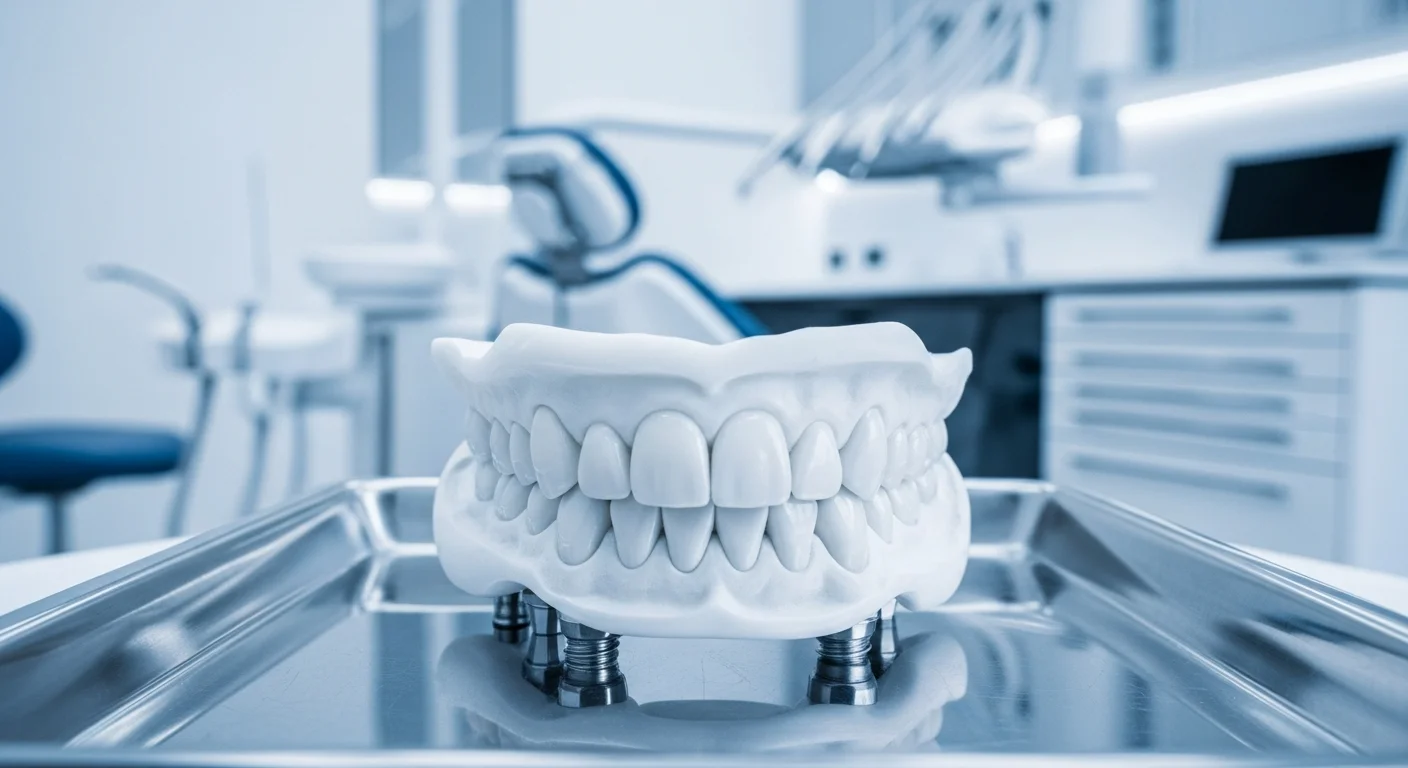
Missing most or all of your teeth affects far more than your smile. It changes how you eat, how you speak, and how your jawbone holds its shape over time. Full mouth dental implants offer a permanent, stable solution that restores both function and confidence. But the biggest question on most patients’ minds is straightforward: how much do full mouth dental implants cost?
Get a free second opinion on your implant case
This guide breaks down the real numbers for 2026, covering every major implant approach, the factors that drive pricing up or down, and how to make an informed decision about the investment in your oral health.
What Are Full Mouth Dental Implants?
Full mouth dental implants replace an entire arch of teeth, upper or lower, using surgically placed titanium or zirconia posts that fuse directly with the jawbone. Unlike traditional dentures that sit on the gums and can slip or shift, dental implants are anchored into bone through a process called osseointegration. This creates a permanent foundation for prosthetic teeth that look, feel, and function like natural teeth.
Full mouth implant treatment can restore one arch or both, depending on the patient’s needs. The result is a fixed set of teeth that does not come out, does not require adhesives, and preserves the jawbone from the deterioration that follows tooth loss.
There are several approaches to full mouth dental implants, and the one your dental team recommends depends on your bone density, overall health, aesthetic goals, and budget.
How Much Do Full Mouth Dental Implants Cost in 2026?
The cost of full mouth dental implants in 2026 varies widely based on the procedure type, materials, geographic location, and individual clinical needs. Here are the national average cost ranges per arch:
| Implant Type | Cost Per Arch (2026 National Average) | Implants Per Arch |
|---|---|---|
| All-on-4 dental implants | $20,000 to $30,000 | 4 |
| All-on-6 dental implants | $25,000 to $35,000 | 6 |
| Traditional full arch (individual implants) | $30,000 to $50,000 | 6 to 8 |
| Zirconia implant full arch | $28,000 to $45,000 | 4 to 6 |
| Subperiosteal implants | $25,000 to $40,000 | Custom framework |
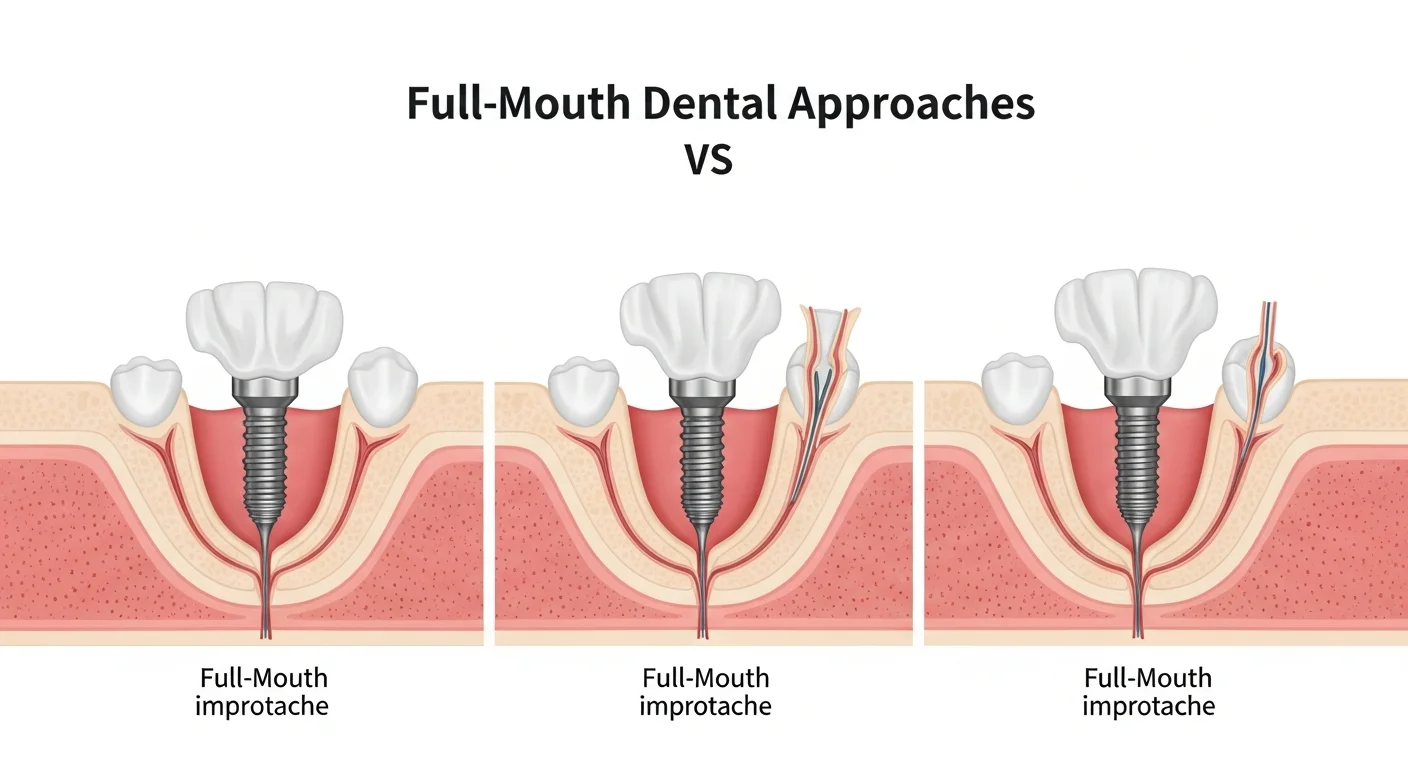
For a complete restoration of both upper and lower arches, patients should expect total costs in the range of $40,000 to $100,000 depending on the approach chosen and the complexity of their case.
These figures reflect national averages. Costs in major metropolitan areas like Los Angeles tend to fall on the higher end of these ranges due to higher overhead, specialized expertise, and access to advanced technology like 3D CBCT imaging and AI-assisted diagnostics.
All-on-4 vs. All-on-6 vs. Individual Implants: Comparing Your Options
Full mouth dental implants come in three primary approaches: All-on-4 ($20,000 to $30,000 per arch), All-on-6 ($25,000 to $35,000 per arch), and traditional individual implants ($30,000 to $50,000 per arch). The right choice depends on your bone density, jaw anatomy, and long-term goals.
Each method has distinct advantages, trade-offs, and cost implications.
All-on-4 Dental Implants
The All-on-4 technique uses four strategically placed implants per arch to support a full set of fixed teeth. Two implants are placed vertically in the front of the jaw, and two are placed at an angle in the back. This angulation maximizes contact with available bone, which often eliminates the need for bone grafting.
Cost range: $20,000 to $30,000 per arch
Best for: Patients with moderate bone loss who want a fixed restoration without extensive surgery. The All-on-4 approach often allows for same-day temporary teeth, meaning you can leave the office with functional teeth on the day of surgery.
All-on-6 Dental Implants
The All-on-6 approach adds two additional implants per arch for a total of six anchor points. The extra implants distribute chewing forces more evenly, which can be particularly beneficial for the upper jaw where bone density is typically lower.
Cost range: $25,000 to $35,000 per arch
Best for: Patients who want additional support and longevity, especially for upper arch restorations. The added implants can reduce stress on individual posts and may extend the lifespan of the prosthetic.
Traditional Full Arch with Individual Implants
Traditional full mouth restoration uses six to eight individual implants per arch, each supporting its own crown or a section of a bridge. This approach offers the most natural tooth-by-tooth result and the greatest flexibility for future maintenance.
Cost range: $30,000 to $50,000 per arch
Best for: Patients with adequate bone density who prioritize the most natural look and feel. Individual implants allow for independent maintenance; if one crown needs attention, the others remain unaffected.
Make an appointment to discuss your implant options
Zirconia vs. Titanium Implants: Material Matters
Zirconia dental implants cost $2,500 to $5,000 per post, while titanium implants cost $1,500 to $3,000 per post. The material used for your implant posts and prosthetic teeth plays a significant role in both total cost and long-term outcomes.
Titanium Implants
Titanium has been the gold standard in implant dentistry since the 1960s. It has a well-documented track record with success rates above 95% over 10 years. Titanium is strong, lightweight, and bonds reliably with bone through osseointegration.
Typical cost per implant: $1,500 to $3,000 (post only)
Advantages:
– Decades of clinical research supporting long-term outcomes
– High strength-to-weight ratio
– Widely available across dental practices
– Lower per-implant cost
Considerations:
– Metal-based, which may concern patients with sensitivities
– Potential for corrosion in the oral environment over many years
– Grey color can show through thin or receding gums
Zirconia Implants
Zirconia (zirconium dioxide) is a ceramic material that offers a metal-free alternative to titanium. Zirconia implants are biocompatible, hypoallergenic, and naturally white, making them an excellent choice for patients who prioritize biocompatibility and aesthetics.
Typical cost per implant: $2,500 to $5,000 (post only)
Advantages:
– Hypoallergenic and corrosion-resistant
– White color prevents gum discoloration
– Smooth surface resists plaque buildup
– No metallic taste
– Strong bone and soft tissue integration
Considerations:
– Higher manufacturing cost
– Fewer long-term studies compared to titanium (arrived in the U.S. market in 2019)
– Not all dental practices offer zirconia implants
For patients seeking a biological, metal-free approach to dental restoration, zirconia implants represent a compelling option that aligns with a whole-body wellness philosophy.
The Subperiosteal Implant Option: A Solution for Severe Bone Loss
Subperiosteal dental implants cost $25,000 to $40,000 per arch and provide a full-arch restoration option for patients who lack sufficient jawbone for traditional implants. Subperiosteal implants bypass the need for bone grafting entirely by using a custom framework that sits on top of the jawbone rather than inside it.
A subperiosteal implant is a custom-designed framework that sits on top of the jawbone, beneath the gum tissue, rather than being drilled into it. Using advanced 3D CBCT imaging, the framework is digitally designed and precision-milled to match the exact contours of each patient’s jaw.
Cost range: $25,000 to $40,000 per arch
Key advantages:
– No bone grafting required
– Single surgical procedure
– Custom-engineered for a perfect anatomical fit
– Ideal for patients with advanced bone resorption
– Supports a fixed, full-arch restoration
Modern subperiosteal implants use CAD/CAM technology and medical-grade titanium (Grade 23 6AL-4V ELI) for exceptional strength and biocompatibility. This approach is particularly valuable for patients who have worn dentures for years and experienced significant bone loss as a result.
What Factors Affect the Cost of Full Mouth Dental Implants?
Eight primary factors determine the final cost of full mouth dental implants: number of implants needed, bone grafting requirements, implant material, prosthetic type, sedation level, extractions, diagnostic imaging, and provider expertise. Understanding these variables helps you evaluate quotes and make apples-to-apples comparisons.
Number of Implants Needed
More implants mean more surgical procedures, more hardware, and higher costs. A four-implant approach costs less than an eight-implant approach, but fewer implants may not be appropriate for every patient.
Bone Grafting and Sinus Lifts
If your jawbone has deteriorated from prolonged tooth loss, periodontal disease, or denture wear, bone grafting may be necessary before implant placement. Bone grafts typically add $2,000 to $5,000 per site. Sinus lifts for upper jaw implants can add another $1,500 to $3,000.
Implant Material
As detailed above, zirconia implants carry a premium over titanium. The prosthetic material also matters: a zirconia full-arch bridge is more expensive than an acrylic hybrid prosthesis but is more durable and stain-resistant.
Prosthetic Type
The type of prosthetic attached to your implants affects cost significantly:
– Acrylic hybrid prosthesis: $4,000 to $8,000 per arch
– Porcelain-fused-to-metal bridge: $6,000 to $12,000 per arch
– Full zirconia bridge: $8,000 to $15,000 per arch
Sedation and Anesthesia
Full mouth implant surgery may require IV sedation or general anesthesia, adding $500 to $2,500 to the total cost depending on the level of sedation and the duration of the procedure.
Extractions and Pre-Surgical Work
If remaining teeth need to be extracted before implant placement, extraction fees apply. Complex or surgical extractions can cost $150 to $600 per tooth.
Diagnostic Imaging
Comprehensive treatment planning requires 3D CBCT scans and digital imaging to map bone density, nerve pathways, and sinus anatomy. Some practices include imaging in their quoted price; others charge separately ($250 to $800).
Geographic Location and Provider Expertise
Implant costs vary significantly by region. Practices in major metropolitan areas charge more due to higher overhead costs. The provider’s training level also matters; a prosthodontist, a specialist who completes three or more years of additional training beyond dental school focused specifically on tooth replacement, typically charges more than a general dentist, but that expertise directly impacts outcomes and longevity.
A Closer Look at the Full Mouth Implant Timeline
Full mouth dental implant treatment takes four months to over one year from initial consultation to final prosthetic placement, divided into five phases. Understanding the treatment timeline helps you plan both financially and personally.
Phase 1: Consultation and Treatment Planning (1 to 2 Weeks)
Your dental team conducts a comprehensive exam, takes 3D CBCT scans, and creates a detailed digital treatment plan. This phase identifies whether you need extractions, bone grafting, or other preparatory procedures.
Phase 2: Preparatory Procedures (If Needed, 2 to 6 Months)
If bone grafting or sinus lifts are required, these are completed first. The grafted bone needs time to heal and integrate before implant placement can begin. Not all patients require this step; approaches like All-on-4 and subperiosteal implants often bypass it entirely.
Phase 3: Implant Placement Surgery (1 to 2 Days)
The implant posts are surgically placed into the jawbone. For many full arch procedures, temporary teeth are attached the same day, allowing patients to leave with a functional smile.
Phase 4: Osseointegration (3 to 6 Months)
The implant posts fuse with the surrounding bone in a process called osseointegration. During this phase, you wear temporary teeth while the permanent bond between implant and bone strengthens.
Phase 5: Final Prosthetic Placement (2 to 4 Weeks)
Once healing is complete, your dental team takes final impressions and fabricates your permanent prosthetic teeth. These are carefully adjusted for fit, bite alignment, and aesthetics before being secured to the implants.
The total timeline from initial consultation to final teeth typically ranges from four months to over a year, depending on whether preparatory procedures are needed.
What Does the Full Mouth Dental Implant Cost Include?
A comprehensive full mouth dental implant quote typically includes the implant posts, abutments, surgical placement, temporary prosthesis, final prosthetic teeth, and follow-up care. However, several common add-on costs are often billed separately.
Typically Included in a Comprehensive Quote:
- Initial consultation and examination
- Diagnostic imaging (CBCT scan, digital X-rays)
- Implant posts and abutments
- Surgical placement
- Temporary prosthesis (if applicable)
- Final prosthetic teeth
- Follow-up appointments during healing
Often Charged Separately:
- Tooth extractions
- Bone grafting or sinus lifts
- Sedation or anesthesia fees
- Periodontal treatment before implant surgery
- Additional imaging
- Long-term maintenance and adjustments
Always ask your dental team for a detailed, itemized treatment plan so you can compare quotes accurately.
Request a free second opinion on your implant treatment plan
Does Insurance Cover Full Mouth Dental Implants?
Most dental insurance plans cover only 40% to 50% of certain implant components, with annual maximums of $1,500 to $2,500 that fall far short of covering full mouth restoration costs. Medical insurance, HSA accounts, and third-party financing can help bridge the gap.
What Insurance Typically Covers
Many dental insurance plans classify implants as a “major procedure” and cover 40% to 50% of certain components, such as the crown or abutment. However, annual maximums (usually $1,500 to $2,500 per year) mean that insurance rarely covers a significant portion of a full mouth restoration.
Medical Insurance Considerations
In some cases, full mouth dental implants may qualify for coverage under medical insurance rather than dental insurance. This is more likely when:
– Tooth loss resulted from trauma or accident
– Implants are deemed medically necessary due to cancer treatment, congenital conditions, or significant functional impairment
– Your physician documents the medical necessity
HSA and FSA Accounts
Health Savings Accounts (HSA) and Flexible Spending Accounts (FSA) allow you to pay for dental implants with pre-tax dollars, effectively reducing the overall cost by your marginal tax rate.
Financing Options
Most dental practices offer financing through third-party lenders that provide:
– Monthly payment plans with terms from 12 to 60 months
– Promotional zero-interest periods (commonly 12 to 24 months)
– Extended payment plans with fixed interest rates
Full Mouth Dental Implants vs. Dentures: A Long-Term Cost Comparison
Full mouth dental implants cost $40,000 to $100,000 upfront for both arches but last 20 to 25 years, while traditional dentures cost $2,000 to $10,000 but require replacement every 5 to 8 years. Over a 25-year period, the total cost of ownership can be surprisingly comparable.
| Factor | Full Mouth Dental Implants | Traditional Dentures |
|---|---|---|
| Upfront cost (both arches) | $40,000 to $100,000 | $2,000 to $10,000 |
| Expected lifespan | 20 to 25+ years | 5 to 8 years |
| Replacement cost over 25 years | $0 to $10,000 (maintenance) | $8,000 to $30,000 (multiple sets) |
| Bone preservation | Yes, stimulates jawbone | No, accelerates bone loss |
| Stability | Fixed, does not move | Can slip, requires adhesives |
| Eating ability | Eat all foods normally | Restricted diet common |
| Speech impact | Natural speech | Slurring or clicking possible |
| Daily maintenance | Brush and floss normally | Remove, soak, and clean daily |
Dental implants also prevent the progressive jawbone loss that makes dentures fit worse and worse over time, providing both functional and structural benefits that dentures cannot match.
How a Prosthodontist Approach Makes a Difference
A prosthodontist is a dental specialist who completes three or more years of advanced residency training beyond dental school specifically focused on restoring and replacing teeth. Not all implant providers bring this level of training, and the difference directly impacts both cost efficiency and long-term outcomes. This additional training includes extensive work with complex implant cases, full mouth rehabilitation, and prosthetic design.
Why this matters for cost and outcomes:
- Fewer revisions: Specialist-level treatment planning reduces the likelihood of costly complications or redo procedures
- Optimized material selection: A prosthodontist evaluates the best implant material and prosthetic type for your specific anatomy
- Digital precision: Advanced practices use 3D CBCT imaging, digital scanning, and AI-assisted diagnostics to plan implant placement with sub-millimeter accuracy
- Long-term value: Getting it right the first time saves significantly on the total cost of care over your lifetime
When evaluating full mouth dental implant providers, ask about their credentials, how many full arch cases they have completed, and what technology they use for treatment planning.
How to Choose the Right Full Mouth Dental Implant Provider
Selecting the right provider is arguably more important than choosing the cheapest option. Here is what to evaluate:
- Credentials and specialization: Is the provider a prosthodontist or an oral surgeon with specific implant training?
- Technology: Does the practice use 3D CBCT scanning, digital impressions, and guided surgery protocols?
- Material options: Can they offer both titanium and zirconia implants? Do they provide options for patients with metal sensitivities?
- Transparent pricing: Will they provide a detailed, itemized treatment plan before you commit?
- Before-and-after results: Can they show you documented results from previous full arch cases?
- Comprehensive care: Does the practice address your overall oral health, including periodontal health and bone condition, as part of the treatment plan?
A thorough consultation should include a comprehensive exam, 3D imaging, a detailed discussion of your options, and a written treatment plan with costs. Many practices offer free consultations or second opinions for implant cases.
Frequently Asked Questions About Full Mouth Dental Implants Cost
How much do full mouth dental implants cost for both arches?
The total cost for full mouth dental implants on both arches ranges from $40,000 to $100,000 in 2026, depending on the approach chosen. All-on-4 dental implants on both arches typically cost $40,000 to $60,000, while traditional individual implant restorations can reach $60,000 to $100,000.
Are full mouth dental implants worth the cost?
Full mouth dental implants are widely considered worth the investment for patients who want a permanent, functional, and natural-looking solution. Unlike dentures, implants preserve jawbone density, do not slip or require adhesives, and can last 20 to 25 years or longer with proper care. When calculated over their lifespan, the annual cost often compares favorably to repeated denture replacements.
Can I get full mouth dental implants with bone loss?
Yes. Several options exist for patients with significant bone loss. Bone grafting can rebuild the jaw to support traditional implants. The All-on-4 technique uses angled implants to maximize existing bone. Subperiosteal implants offer a custom framework that sits on top of the jawbone without requiring any grafting at all.
What is the cheapest option for full mouth dental implants?
All-on-4 dental implants are generally the most affordable full mouth implant option, starting around $20,000 per arch. This approach uses fewer implants and often eliminates the need for bone grafting, reducing both surgical complexity and cost. However, the right option depends on your clinical situation, not just price.
How long do full mouth dental implants last?
With proper care, including regular brushing, flossing, and professional dental visits, full mouth dental implants can last 20 to 25 years or longer. The implant posts themselves often last a lifetime, while the prosthetic teeth (crowns or bridges) may need replacement or adjustment after 15 to 20 years.
Does dental insurance cover full mouth implants?
Most dental insurance plans provide limited coverage for implants, typically covering 40% to 50% of certain components up to the annual maximum (usually $1,500 to $2,500). Full mouth restorations far exceed these limits. Medical insurance may cover implants in cases involving trauma, cancer, or documented medical necessity. HSA and FSA accounts can also help offset costs.
Take the Next Step Toward Full Mouth Dental Implants
Understanding the cost of full mouth dental implants is the first step toward making an informed decision about your oral health. The right approach depends on your bone condition, health goals, budget, and the expertise of your dental team.
If you are considering full mouth dental implants, or if you have already received a treatment plan and want a second perspective, a consultation with a prosthodontist who specializes in full arch restoration can help you understand exactly what your case requires and what it will cost.
